

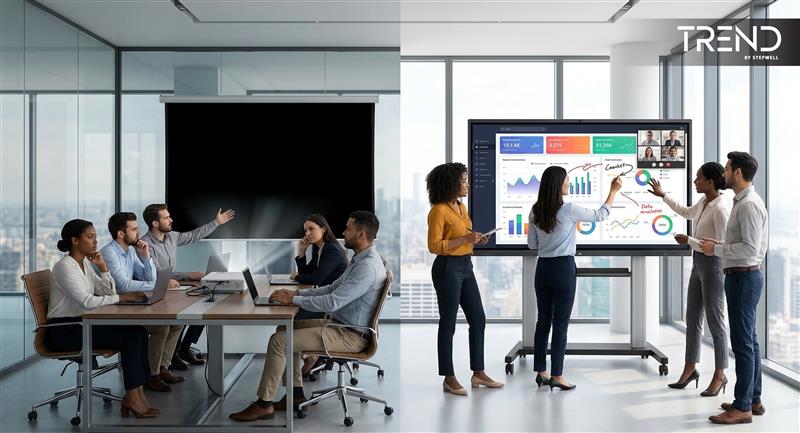
Workplaces are evolving faster than ever in today’s digitally driven, fast-paced world. Companies are making significant investments in workplace strategy and digital transformation to remain competitive, agile, and collaborative. However, many offices still rely on outdated, static screens—traditional displays that do not support interaction. This is why adopting an interactive display for workplace environments is becoming essential to improve communication, enable real-time collaboration, and meet the demands of modern teams.
The problem? Static screens are no longer enough.
Modern teams require smarter, more dynamic tools that enhance communication, streamline workflows, and increase engagement. This is where interactive workplace displays are not just an upgrade—they are a necessity
The Drawbacks of Static Screens
Static screens once served a purpose. They allowed businesses to present slides, display information, and showcase visuals. However, in today’s collaborative work environment, their limitations are clear:
* No real-time interaction
* Minimal meeting participation
* One-way communication
* Poor collaboration in remote or hybrid environments
As businesses move toward flexibility and innovation, replacing outdated office screens with dynamic solutions has become essential.
The Rise of Interactive Displays
Interactive displays are transforming how teams communicate and collaborate. Unlike static screens, they allow users to write, draw, present, and interact with content in real time.
A touchscreen display turns a standard meeting into an engaging, idea-driven session. Teams can brainstorm, annotate, and collaborate seamlessly—whether they are in the same room or working remotely.
At TREND, we understand that business success requires more than just a screen—it requires intelligent solutions that drive productivity and interaction.
Benefits of Interactive Displays in the Workplace
1. Enhanced Collaboration
Interactive displays act as powerful collaboration tools. Teams can work on shared content, make live edits, and exchange ideas effortlessly.
This is especially valuable in hybrid workplaces, where remote participants can stay fully engaged.
2. Improved Meeting Efficiency
Traditional meetings often lose time due to device switching or technical issues. Interactive flat panels bring everything into one unified platform.
You can:
* Share screens instantly
* Annotate presentations in real time
* Save and distribute meeting notes
This results in faster decision-making and more productive discussions.
3. Better Engagement
Static screens often lead to passive audiences. Interactive displays, however, encourage active participation.
When employees can interact directly with content, they stay more focused and engaged—improving both knowledge retention and collaboration.
4. Seamless Integration with AV Solutions
Modern workplaces rely on advanced AV solutions. Interactive displays integrate seamlessly with cameras, audio systems, and conferencing tools.
This creates a fully connected environment where communication flows effortlessly—whether for client presentations or team brainstorming.
5. Increased Workplace Productivity
One of the biggest advantages of interactive displays is their impact on productivity.
With fewer technical disruptions and more efficient workflows, teams can accomplish more in less time—focusing on meaningful work rather than operational hurdles.
Supporting Digital Transformation
Digital transformation is driving the shift toward smarter workplaces. Businesses are moving away from outdated tools and adopting technologies that enable agility and innovation.
Interactive displays play a critical role by:
* Enabling real-time communication
* Supporting hybrid and remote work models
* Enhancing data visualization and presentations
* Streamlining operations
Organizations that fail to adapt risk falling behind in an increasingly competitive environment.
Smart Meeting Room Solutions: The Future
Meeting rooms are no longer just tables and screens—they are evolving into intelligent collaboration hubs.
At the center of this transformation are interactive displays, combined with advanced AV systems to create environments where:
* Meetings start instantly
* Remote participants feel equally included
* Ideas can be captured and shared effortlessly
TREND delivers innovative solutions designed to transform meeting spaces and enable seamless collaboration.
Why Businesses Must Replace Static Screens Now
The shift is clear: replacing static screens is no longer optional—it’s strategic.
Businesses that continue using outdated technology face:
* Reduced engagement
* Inefficient communication
* Slower decision-making
Upgrading to interactive displays ensures future readiness and supports growth and innovation.
Conclusion
Static screens have served their purpose, but modern workplaces demand more. Interactive technology is now essential for collaboration, flexibility, and efficiency.
An interactive workplace display is not just a tool—it’s a catalyst for transformation.
At TREND, we specialize in delivering advanced smart meeting room and AV solutions that help businesses thrive in the digital era.
It’s time to move beyond static screens and embrace the future of workplace technology.